
Table of Contents
- Understanding Reactive vs. Sensitive Skin
- Best Skincare Ingredients for Sensitive Skin
- Skincare Products to Avoid for Sensitive Skin
- How to Repair Damaged Skin Barrier
- Your Step-by-Step Gentle Skincare Routine
- How to Patch Test New Products
- Post-Flare-Up Recovery and Environmental Trigger Tracking
- Frequently Asked Questions
Last Updated: September 27, 2026
Understanding Reactive vs. Sensitive Skin
Reactive skin is skin that responds intensely to environmental triggers, products, or stress with visible inflammation, redness, or irritation. Sensitive skin, by contrast, is a skin type prone to reactions, often due to a compromised skin barrier that can't protect against irritants effectively.
Reactive skin is often temporary, triggered by a harsh product or weather change, while sensitive skin is a persistent condition affecting most products.
Many people have both; a compromised barrier creates a cycle where chronic reactivity damages it further.
The Often-Overlooked Emotional Impact
Chronic skin flare-ups carry real psychological weight: unpredictable redness and worry about triggers create stress and social anxiety, sometimes causing people to avoid situations during flare-ups.
Stress worsens reactivity by triggering cortisol release, which increases inflammation and compromises the barrier, a feedback loop where anxiety about skin makes skin worse.
Reactive skin is manageable once you identify triggers, rebuild your barrier with the right ingredients through gentle skincare for reactive skin, and prioritize calm. As skin stabilizes, confidence improves.
Why Reactivity Patterns Matter
Reactive skin follows patterns based on your unique biology, environment, and lifestyle. Understanding your personal reactivity pattern transforms it from chronic frustration into a manageable condition.
Best Skincare Ingredients for Sensitive Skin
Skin-Calming Powerhouses
Panthenol draws moisture into skin while reducing inflammation. Beta-glucan strengthens skin's immune response. Aloe vera and chamomile calm redness and provide soothing hydration.
At Beverly's, our gentle skincare formulations feature these calming powerhouses in accessible, spa-inspired products designed specifically for reactive skin.
Centella asiatica (cica) is gaining recognition for its ability to repair compromised barriers while calming active irritation. It's particularly effective for post-flare-up recovery.
Barrier-Strengthening Essentials
Ceramides fill gaps in the barrier and prevent water loss. Hyaluronic acid holds moisture and plumps cells. Niacinamide strengthens barrier function while reducing redness.
A moisturizer containing all three is far more effective than one with a single ingredient.
Look for products labeled pH-balanced and non-comedogenic, these are formulated to respect your skin's natural pH and won't clog pores or trigger reactions in acne-prone reactive skin.
Skincare Products to Avoid for Sensitive Skin
Certain ingredients and product types consistently trigger reactive skin. Understanding what to avoid is as important as knowing what to use.
Fragrance, both synthetic and natural essential oils, is the leading trigger for reactive skin. Even "lightly scented" products can irritate.
Alcohol (ethanol, isopropyl alcohol) strips moisture and damages the barrier. Avoid any product with alcohol listed in the first five ingredients.
Exfoliating acids (AHAs, BHAs, retinoids) are too harsh during active reactivity. Wait until skin calms, then start with the lowest concentration.
Sulfates in cleansers strip natural oils and disrupt the microbiome. Sulfate-free cleansers are gentler and maintain the skin's protective barrier.
Essential oils and strong plant extracts often irritate reactive skin; chamomile extract is gentler than concentrated chamomile essential oil.
Silicones can trap bacteria and irritants against the skin surface. For reactive skin, avoid heavy silicone-based primers and serums.
How to Repair Damaged Skin Barrier
Start by simplifying your routine to the absolute essentials: a gentle, fragrance-free cleanser, a barrier-repair moisturizer, and sunscreen. Remove everything else temporarily. This gives your barrier space to heal without interference.
Apply moisturizer to damp skin within 30 seconds of cleansing; damp skin absorbs it more effectively. Use a ceramide-rich moisturizer with hyaluronic acid and niacinamide.
At night, consider a heavier occlusive like a facial oil or rich cream over your moisturizer. This locks in hydration and gives your barrier maximum recovery time while you sleep.
Barrier repair typically takes 4-6 weeks. Avoid new products and harsh treatments. Space new introductions at least one week apart.
Sunscreen is non-negotiable during barrier repair. UV damage accelerates barrier breakdown. Use a mineral sunscreen (zinc oxide or titanium dioxide) rather than chemical sunscreens, which can irritate reactive skin.
Your Step-by-Step Gentle Skincare Routine
Gentle skincare for reactive skin prioritizes simplicity and consistency over complexity. The goal is to calm irritation, repair the barrier, and prevent new reactions.
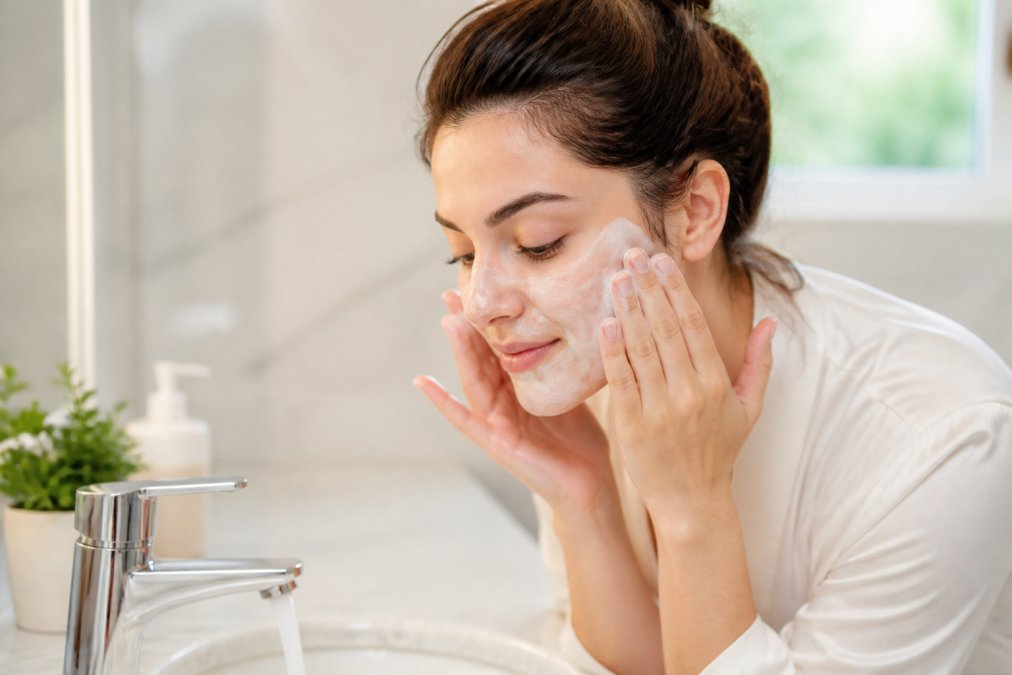
Cleansing Without Irritation
Cleanse twice daily with a gentle, fragrance-free cleanser using lukewarm water; heat irritates reactive skin.
Apply cleanser to damp skin and massage gently for 30-45 seconds with fingertips.
Hydration and Soothing
Apply a hydrating toner or essence while skin is still slightly damp to prep for serums.
Protection and Recovery
During the day, apply a mineral sunscreen with zinc oxide or titanium dioxide as your final step. Allow 15 minutes for it to set before applying makeup or other products.
How to Patch Test New Products
Apply a small amount behind your ear or on your inner arm. Wait 24-48 hours for any redness, itching, or burning.
Post-Flare-Up Recovery and Environmental Trigger Tracking
The Emergency Recovery Protocol
During an active flare-up, your goal is to stop the inflammatory cascade, not treat or improve skin. Aggressive treatment only extends the flare.
Days 1-3: Crisis Mode
- Cleanser only: Use fragrance-free, non-foaming cleanser once daily at night; rinse with lukewarm water in the morning.
- Moisturizer only: Apply barrier-repair moisturizer with ceramides, hyaluronic acid, and niacinamide to damp skin immediately after cleansing.
- No sunscreen yet: If it irritates, stay indoors or use protective clothing until inflammation subsides.
- No actives, exfoliants, or new products: Nothing else touches your face.
- Cool compress: Apply a cool (not cold) damp cloth to inflamed areas for 5-10 minutes, 2-3 times daily. This reduces inflammation and provides immediate relief.
- Hydration and sleep: Drink extra water and prioritize sleep; dehydration worsens inflammation.
Days 4-10: Active Calming
Once acute inflammation subsides, expand slightly:
- Add a soothing serum: Introduce centella asiatica (cica), panthenol, or beta-glucan before moisturizer; cica is particularly effective for calming and repair.
- Introduce sunscreen: Use a mineral sunscreen (zinc oxide or titanium dioxide) during the day. Mineral formulas are less likely to irritate than chemical sunscreens during recovery.
- Add an occlusive at night: Layer a facial oil or rich cream over your moisturizer to lock in hydration and maximize overnight barrier repair.
- Continue simplified routine: Still no actives, exfoliants, or new products.
Weeks 2-4: Stabilization
- Maintain the core routine: Gentle cleanser, soothing serum, barrier moisturizer, occlusive at night, sunscreen during day.
- Patch test before reintroducing anything: Even products you've used before should be patch tested after a flare, as your skin may be temporarily sensitized.
- Space new product introductions: If you do add something back, wait at least 7-10 days between introductions so you can clearly identify what triggers a reaction if one occurs.
Environmental Trigger Tracking
After an active flare-up, your skin needs intentional recovery. Don't immediately return to your normal routine; extend your simplified, barrier-repair routine for an additional 1-2 weeks after inflammation subsides.
Common environmental triggers and mitigation strategies:
- Cold, dry air: Use a humidifier indoors (aim for 40-60% humidity). Apply moisturizer more frequently during winter months. Avoid overheated indoor environments when possible.
- Hard water: Hard water contains minerals that can irritate reactive skin. Consider installing a shower filter or using distilled water for the final rinse after cleansing.
- Pollution and air quality: On high-pollution days (check your local air quality index), cleanse more thoroughly at night to remove particulates. Consider a gentle double cleanse: oil cleanser first, then water-based cleanser.
- Stress and poor sleep: Chronic stress elevates cortisol, which increases inflammation (Checking your browser). Poor sleep prevents your skin from completing its repair cycle. Both directly worsen reactivity. Prioritize 7-9 hours of sleep and stress-management practices (meditation, exercise, time in nature).
- Rapid temperature changes: Moving between cold outdoor air and heated indoor spaces causes blood vessel constriction and dilation, triggering inflammation. Protect your face with a scarf or hat when moving between extreme temperatures.
- Chlorine from swimming pools: Chlorine strips the skin barrier. If you swim, rinse immediately with fresh water and apply moisturizer within 15 minutes.
- Laundry detergent residue: Detergent left on pillowcases and towels can irritate reactive skin. Use fragrance-free, hypoallergenic detergent and rinse thoroughly. Consider a second rinse cycle.
- Fragrance in personal care products: Shampoo, conditioner, and body wash fragrance can transfer to your face. Switch to fragrance-free versions of all personal care products, not just skincare.
Create your personal trigger map:
| Recovery Phase | Timeline | Focus | Key Actions |
|---|---|---|---|
| Immediate flare-up | Days 1-3 | Stop inflammation, minimize irritation | Cleanser + moisturizer only, cool compress, no actives, prioritize sleep |
| Active calming | Days 4-10 | Reduce inflammation, begin barrier repair | Add soothing serum, introduce sunscreen, add occlusive at night |
| Stabilization | Weeks 2-4 | Maintain barrier, prevent relapse | Continue simplified routine, patch test before new products, space introductions 7-10 days apart |
| Return to normal | Weeks 4-8 | Reintroduce products slowly if desired | Gradual introduction of other products, monitor for triggers |
Frequently Asked Questions
Is reactive skin the same as sensitive skin?
Not quite. Sensitive skin is a skin type you're born with, while reactive skin is a temporary state triggered by specific irritants, products, or environmental factors. Reactive skin can occur in anyone when the skin barrier is compromised or exposed to harsh ingredients. Understanding which you have helps you choose the right gentle skincare approach and identify your specific triggers.
What are the best ingredients for reactive skin?
Ceramides, panthenol, beta-glucan, aloe vera, and chamomile are proven skin-calming and barrier-strengthening ingredients. Look for fragrance-free, hypoallergenic, non-comedogenic formulations with pH-balanced cleansers and moisturizers. These ingredients reduce inflammation, support skin barrier repair, and minimize transepidermal water loss, making them ideal for gentle skincare routines.
How can I tell if my skin barrier is damaged?
Signs of a compromised barrier include persistent redness, inflammation, sensitivity to most products, dryness despite moisturizing, and increased reactivity to environmental triggers. If your skin feels tight, stings easily, or flares up unpredictably, your barrier likely needs repair. A routine focused on hydration and soothing ingredients can help restore it.
How long does it take to see improvement with gentle skincare for reactive skin?
Most people notice reduced redness and calming effects within 1-2 weeks of consistent use. Full skin barrier repair typically takes 4-6 weeks. Results depend on the severity of reactivity, adherence to your routine, and avoiding trigger ingredients. Patience and consistency matter more than switching products frequently, which can further irritate reactive skin.